Useful change begins with a specific question. Work through the ideas below, then use the field exercise to test one of them in context.
Audit before optimizing
For one week, note where time goes: planned work, interruptions, meetings, and rework. Look for patterns, not an idealized schedule.
- Capture the largest recurring interruptions.
- Identify work with no clear owner.
- Keep a record of avoidable rework.
Plan around outcomes
Choose one important result for the day and reserve a realistic block to advance it. Group small tasks when possible, and leave space for the unexpected.
- Set a finish line for focus time.
- Batch low-stakes messages.
- Revisit priorities when new work arrives.
Improve the environment
A tidy workspace helps, but the bigger gains often come from shared file naming, documented processes, and fewer unnecessary meetings.
- Make frequently used material easy to find.
- Document repeated decisions.
- Remove one meeting that no longer serves a purpose.
The five-day friction log
Time management starts by noticing why planned work is displaced. This log separates necessary collaboration from avoidable rework so a team can change the conditions, not just ask people to focus harder.
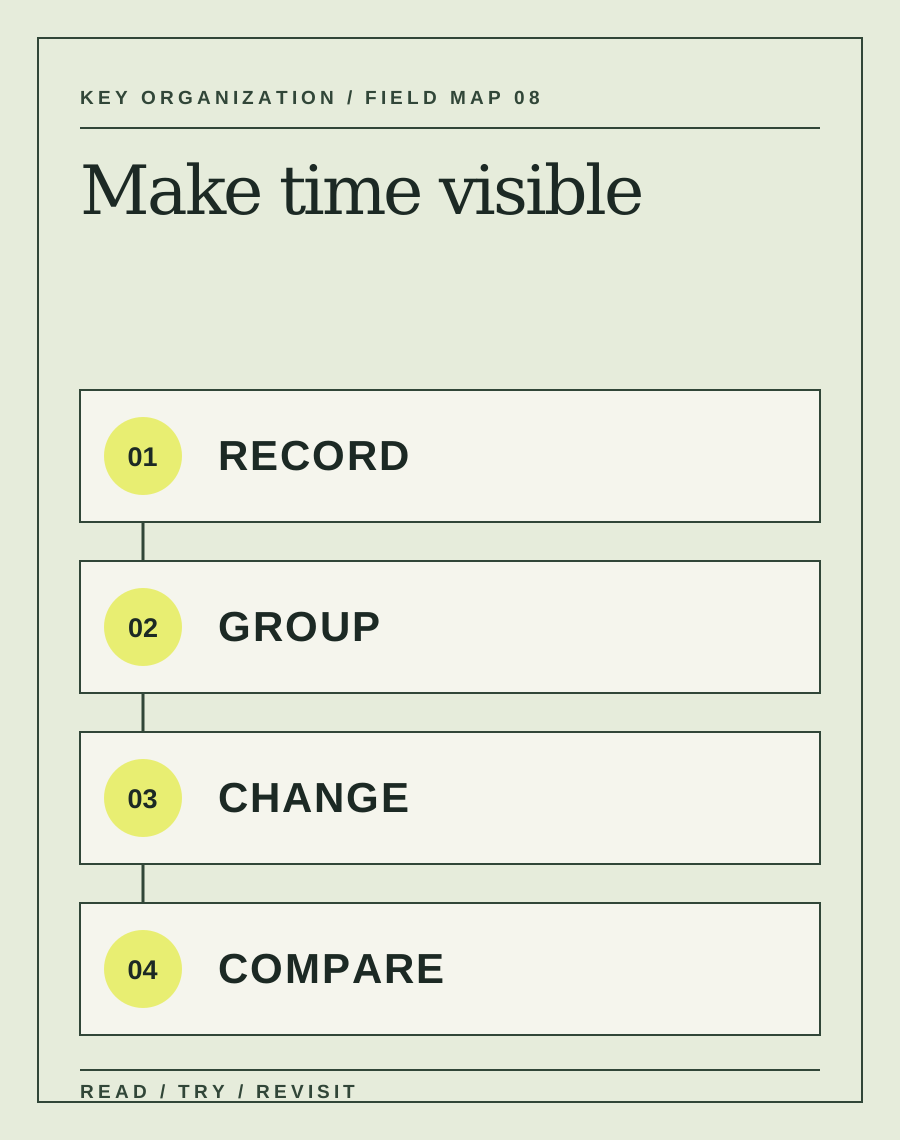
- Record the shift
For five workdays, note the largest unplanned interruption and what it replaced. Do not record every minute.
- Find the pattern
Group the entries into decisions, missing information, meetings and genuine emergencies.
- Choose one fix
Change a shared default: where answers live, when requests are batched or who can decide.
- Compare again
Repeat the log after the change. Ask whether the work moved more smoothly and whether another team absorbed the cost.
Imagine a writer repeatedly stopping to find the latest approved product details. A single maintained source page removes more friction than another personal focus app.
Do not turn the log into surveillance of individuals. Keep the unit of analysis the repeated interruption and the process behind it.
RESEARCH CONTEXT / Microsoft Work Trend Index: breaking down the infinite workday ↗
Try it in your next workweek.
Run a five-day time audit and change one recurring source of rework the following week.
Go deeper on a specific problem
- Assertive time management: make commitments you can keep ↗
- Budget your workweek without treating every hour as available ↗
- Organizing with children: routines that they can actually use ↗
- When someone else’s disorganization delays your work ↗
- Internet distractions at work: change the environment first ↗
- Multitasking at work: coordinate tasks without losing the thread ↗
- Overcommitted at work? Make the trade-off visible ↗
- A calendar audit that gives your week room to work ↗
- Sleep and work: plan for rest instead of borrowing from it ↗
- Vacation coverage: make time off possible without a crisis ↗
- Reliability at work: keep promises visible and repair misses quickly ↗
- Digital filing: make the right document easy to find ↗
- Scanning paper records: preserve context, quality and access ↗
- Remembering work tasks: build a trusted capture system ↗
- Effective versus efficient work: choose the right outcome first ↗
- Organizing work travel: a checklist that survives changes ↗
- Work stress and capacity: change the system before the slogan ↗
- Waiting time for caregivers: use it without turning every minute into work ↗
- Office hygiene routines that people can actually follow ↗
- Studying while working: build a schedule with a real capacity limit ↗
- Punctuality at work: design a reliable arrival, not a perfect person ↗
- Schedule clutter: remove commitments that no longer earn their place ↗
- Time management myths that make a busy week worse ↗
- When to discard a file, object or commitment ↗
- Reading and recall at work: turn notes into usable decisions ↗
- Movement at work: fit activity into the day without productivity promises ↗
- A tight deadline: make a smaller honest promise ↗
- Perfectionism and deadlines: define done before starting ↗