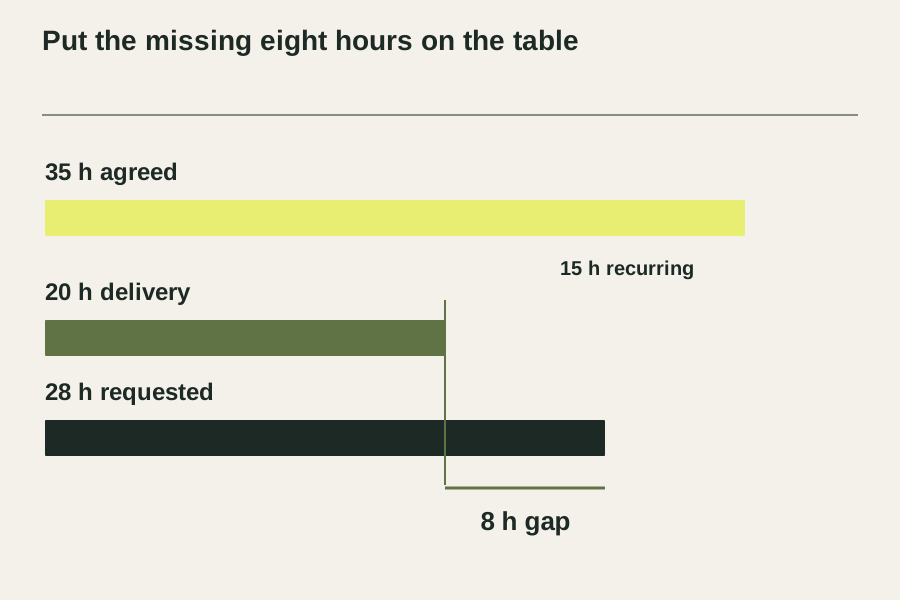
An impossible week is not repaired by a more colorful calendar. It is repaired when someone can see the commitments and choose which one changes.
Inventory promises, not tasks
List each promised output, its recipient, due date and minimum useful version. Include recurring support work and reviews that consume the same people’s time. Mark dependencies you do not control. A list of tiny subtasks can hide the central problem: several outcomes are due at once and all require the same scarce attention.
Choose what will move
For every new request, ask which existing output should be delayed, reduced or reassigned. Present options with consequences rather than a silent “yes.” If a hard deadline cannot move, reduce optional scope or obtain real help with a clear handoff. Do not count help that has not been agreed or a colleague’s evening as spare capacity.
Reset the next week
After the immediate decision, look for the repeated reason commitments pile up: unplanned approvals, vague briefs, missing data or work started before an owner is available. Change one rule. A short weekly capacity review with the people who can make trade-offs works better than asking each person to privately optimize an impossible schedule.
Try it in a real workweek

A team promises a launch page, a research memo and a reporting dashboard for Friday. The page is legally required; the memo needs a source not yet received. They publish the page, move the memo review and narrow the dashboard to two agreed measures. The decisions are recorded before Thursday.
Chronic overload can be a workplace health issue. Treat it as an organizational condition rather than an individual failure.
Check the source and the context
For the next step, see this related field guide.