Useful change begins with a specific question. Work through the ideas below, then use the field exercise to test one of them in context.
Make values operational
For each value, identify a hiring practice, a meeting habit, and a recognition example that supports it. Look for contradictions between what is stated and what is rewarded.
- Write examples for ordinary situations.
- Give new starters a safe way to ask questions.
- Review decisions for consistency.
Create room for different voices
Send context before meetings and offer written input as well as live discussion. Rotate facilitation so the same people do not always shape the agenda.
- Ask who was not in the room.
- Capture dissent without penalty.
- Close the loop after decisions.
Protect a sustainable pace
A healthy culture makes workload discussable. Review capacity before accepting new commitments and avoid treating long hours as proof of impact.
- Track recurring overload.
- Plan recovery after intense periods.
- Reward useful outcomes, not visible busyness.
The culture evidence walk
Instead of asking whether the culture is good, inspect a few decisions and routines that people actually experience. This walk produces observations a team can discuss without asking anyone to reveal a private story.
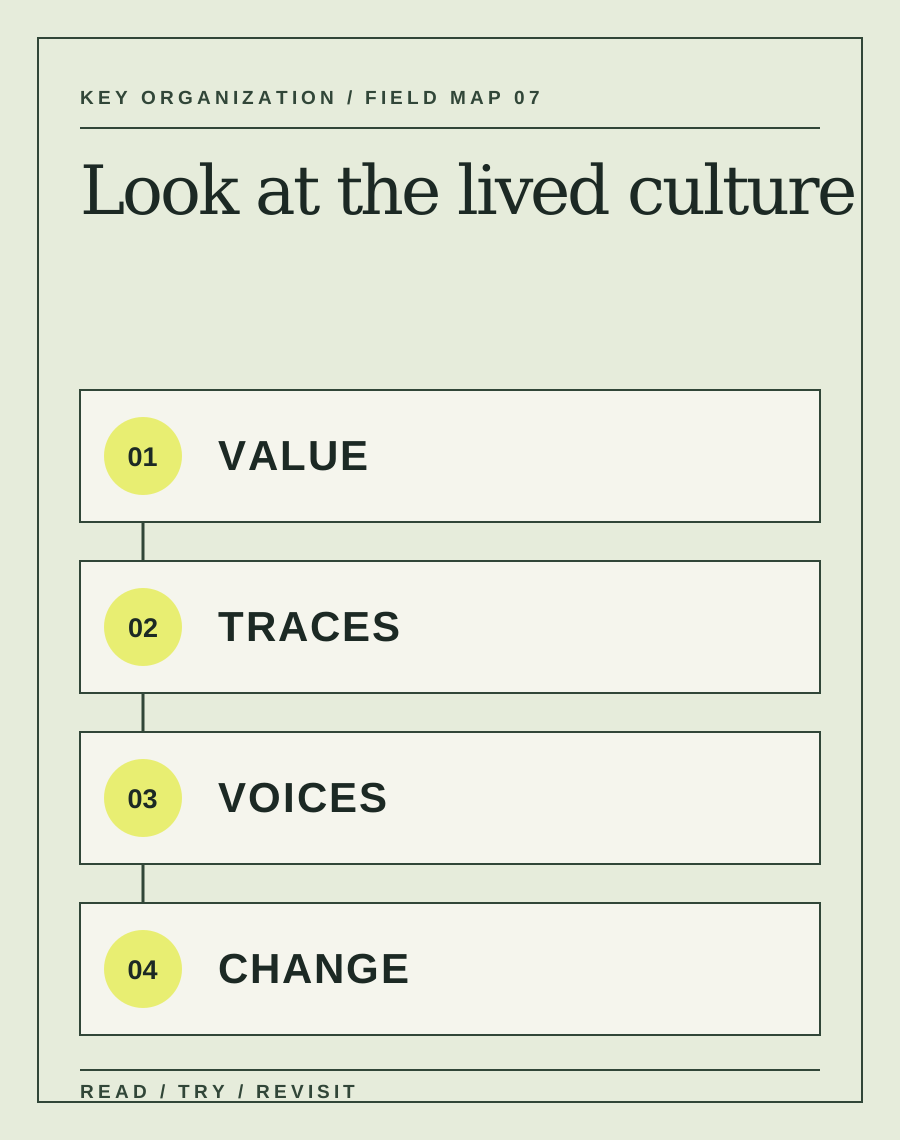
- Pick a value
Choose one stated value and a normal work situation where it should matter.
- Find three traces
Review a hiring step, a meeting routine and a recognition example. Look for what the organization rewarded in practice.
- Invite perspectives
Ask people in different roles what they saw, including those who were not in the decision room.
- Change one routine
Choose a specific adjustment, owner and review date. Tell people what changed because of their input.
Imagine a company saying it values learning while only celebrating flawless launches. It starts sharing one useful lesson from each project review, including a decision that was changed after feedback.
Do not publish individual comments as evidence of culture without consent. Summarize patterns and protect the people who raised concerns.
RESEARCH CONTEXT / Gallup: State of the Global Workplace 2026 ↗
Try it in your next workweek.
Ask five colleagues which routine best represents the culture today. Compare their answers with the stated values.