Useful change begins with a specific question. Work through the ideas below, then use the field exercise to test one of them in context.
Match the channel to the message
Use a written document for durable instructions, a meeting for complex decisions, and a short message for coordination. Urgent does not mean every update belongs in a meeting.
- Define where final decisions live.
- Add a deadline to requests that need a response.
- Summarize meetings in writing.
Make feedback safe and specific
Invite disagreement before a choice is final. Ask what is confusing, what might fail, and what evidence is missing. Acknowledge the input even when the decision stays the same.
- Ask one focused question at a time.
- Separate observations from interpretations.
- Report back on what changed.
Design for handoffs
A handoff should contain the expected output, owner, context, and acceptance criteria. Without them, the next team must reconstruct the work.
- Use a simple handoff template.
- Confirm who takes the next step.
- Track recurring handoff failures.
The handoff brief
Use a short handoff when work crosses roles or teams. The receiver should be able to start without reconstructing the meeting, chasing a file or guessing what finished means.
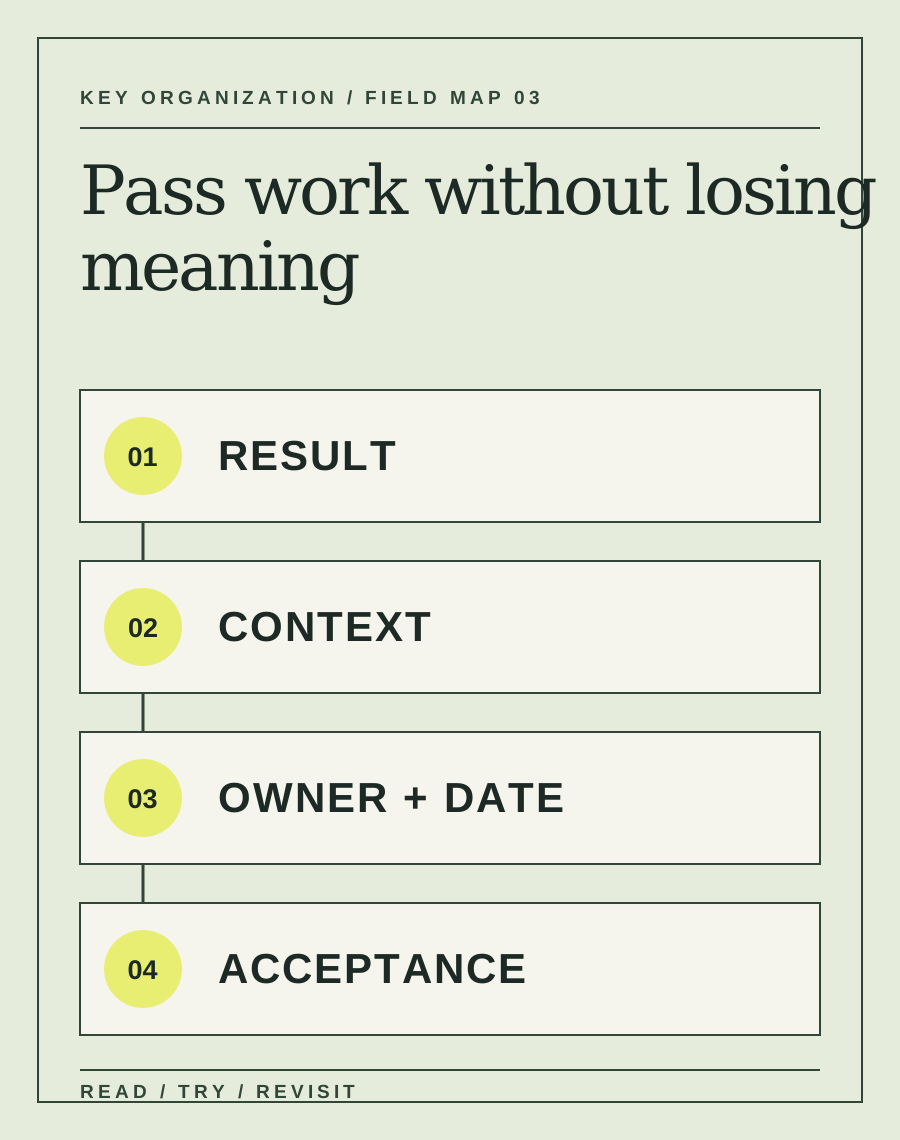
- Result
Describe the output and the person who will use it. Include a concrete example when the result is easy to misread.
- Context
Link the current source of truth, constraints and earlier decisions. Leave out background that does not affect the next action.
- Owner and date
Name the person taking the next step and the date when a first response or draft is needed.
- Acceptance
List two or three observable checks that define done. Add a path for resolving unclear requirements.
Imagine a designer handing a landing page to a developer. Instead of 'please build this', the brief identifies the approved copy, responsive design file, accessible menu behavior, test widths and reviewer. A question about an unfinished illustration has a named owner.
A handoff is not a document dump. If the receiver still needs to ask which version is final, the source of truth is missing.
RESEARCH CONTEXT / Microsoft Work Trend Index: the fragmented workday ↗
Try it in your next workweek.
Take one repeated question and turn its answer into a short, findable guide with a named owner.
A meeting should end with a choice
A meeting earns its place when someone can make a choice that would be harder to settle in writing. A status report is useful, but reading it aloud is not a decision. Start by writing the choice in one sentence: which option, within which constraint, decided by whom? If nobody can name it, send the update asynchronously or explain that the meeting is for exploration rather than approval.
A 25-minute agenda with a stopping rule
- Before the call: send the current evidence, two realistic options and the person authorised to decide. Ask participants to flag missing information before they arrive.
- Minutes 0–3: confirm the choice and the deadline. Say which constraints can change and which cannot.
- Minutes 3–9: separate facts, assumptions and unknowns. Do not treat a confident statement as evidence.
- Minutes 9–17: compare the options against the same criteria. Invite one objection to the preferred option before voting or deciding.
- Minutes 17–22: choose, defer with a specific evidence request, or escalate to the actual decision owner.
- Minutes 22–25: read the decision back. Name the next action, its owner, the review date and the event that could reopen the choice.
This timing is an editorial template, not a proven optimum. A sensitive personnel matter or an irreversible commitment may need a different format. If the missing evidence changes the answer, closing on time should mean recording a deferral, not manufacturing agreement.
Filled example: the launch date stays, the scope changes
Fictional team: a four-person studio has five screens ready for review and a Friday launch promise. Two screens have unresolved accessibility problems. Option A keeps all five and moves the date; option B launches three reviewed screens and schedules the remainder separately. The team chooses B because the customer can complete the essential task with those three. This is an invented planning example, not a reported project result.
Decision record: retain Friday for the three essential screens. Mina owns the reduced scope; Eli reviews the draft by Wednesday at 15:00. The unchecked screens stay unpublished. Reopen the decision if the essential journey fails review. The record links the approved draft and lists the objection: a customer may expect the missing features. Customer communication therefore becomes an assigned task rather than a footnote.
What an honest close sounds like
“We chose the smaller release because it meets the essential task within the deadline. The remaining work is not approved. Mina will send the revised scope; Eli will check it. We revisit if the essential journey fails.” A useful recap also records disagreement without describing a dissenter as difficult. Let the participants correct the written record before it becomes the shared reference.
Reuse without turning the log into surveillance
Keep the shared record to the choice, reason, owner and next check. Do not store private disclosures or a transcript of every contribution in a general project log. At the next meeting, begin with the promised action: was it completed, did its evidence change the assumption, and is another meeting necessary? The downloadable worksheet below includes a blank row and this fictional example.
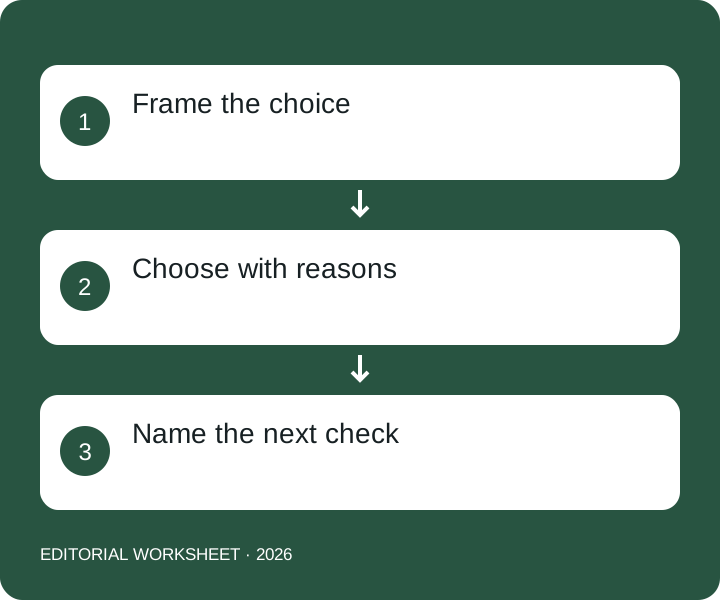
Text equivalent: Frame the choice → Choose with reasons → Name the next check.
Prepare a local worksheet
Your text stays in this page. It is not sent, stored or checked for accuracy. Use anonymised examples.
Download blank worksheet and filled example ↓