Useful change begins with a specific question. Work through the ideas below, then use the field exercise to test one of them in context.
Write the one-page version
State whom you serve, the problem you solve, why your approach is different, and the outcome you will measure. If two priorities compete, the page should help resolve the conflict.
- Describe a real customer need.
- Choose no more than three priorities.
- Name one thing you will deliberately avoid.
Translate choices into work
Every priority needs a project, an owner, and a resource decision. Teams should see how their weekly tasks contribute to the larger result.
- Connect projects to one priority.
- Estimate the capacity they require.
- Pause work that has no clear connection.
Review evidence, then revise
Use a monthly review to inspect leading indicators and customer feedback. Keep the direction stable long enough to learn, while changing tactics that are not working.
- Record the assumption behind each initiative.
- Compare results with the expected signal.
- Explain changes to everyone affected.
The strategy choice canvas
A strategy becomes usable when it rules out plausible alternatives. Complete this canvas with a team before translating it into projects; a list of priorities without a trade-off is still a wish list.
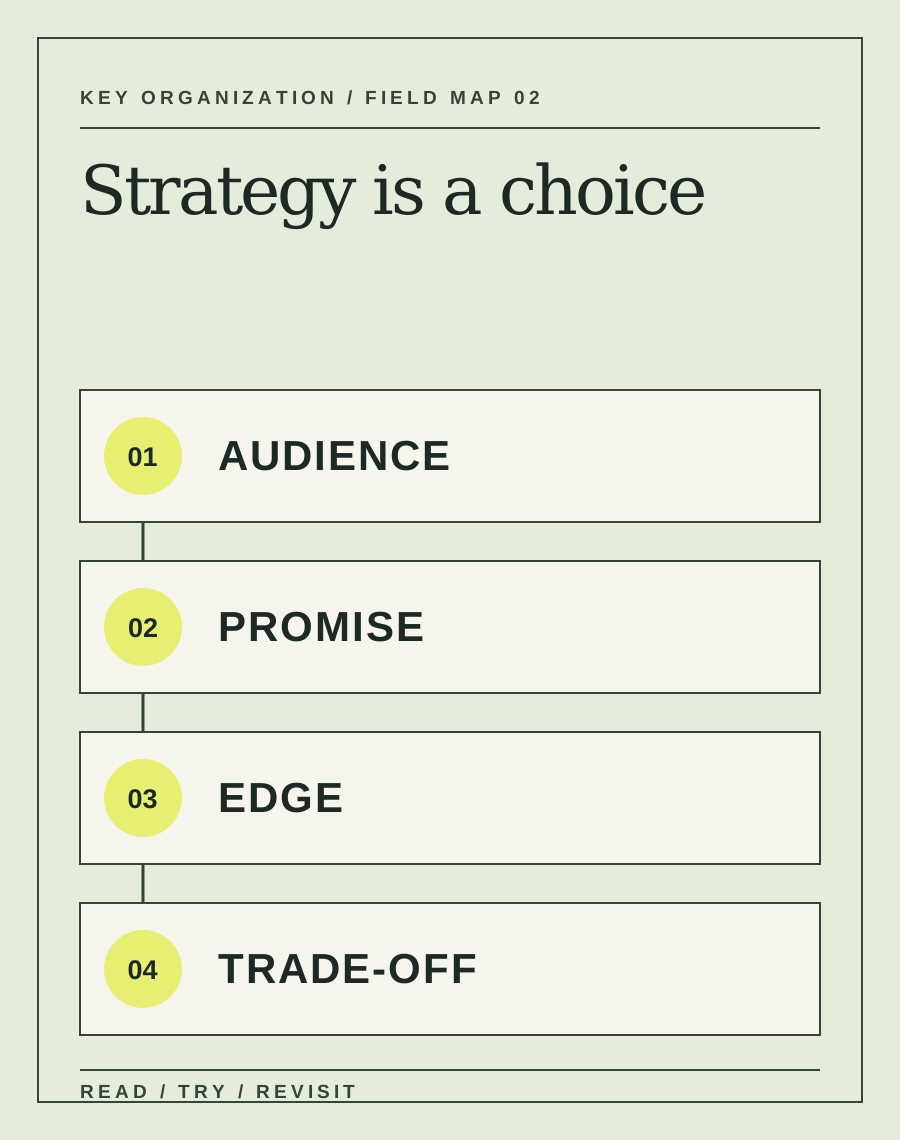
- Audience
Name the people and situation you are choosing to serve. A broad market label is not specific enough to guide a product decision.
- Promise
State the change those people should experience and the evidence that would show it happened.
- Edge
Explain which capability, access or way of working lets your team deliver that promise reliably.
- Trade-off
Write one attractive project you will pause or decline so the chosen work has capacity.
Imagine a small training company choosing to help first-time managers run clearer weekly decisions. It puts a generic leadership newsletter on hold and invests in reusable meeting tools. The trade-off makes the next hiring and content decisions easier.
Avoid a canvas that could describe any competitor. Test it by asking whether two teams would choose the same next project from it.
RESEARCH CONTEXT / Harvard Business School: strategy and trade-offs ↗
Try it in your next workweek.
Write a six-sentence strategy brief and ask three teammates what they would stop doing because of it.