Useful change begins with a specific question. Work through the ideas below, then use the field exercise to test one of them in context.
Describe behavior you can observe
Replace vague values with examples. 'Collaborate' becomes sharing a draft early, asking for input from affected teams, and recording the final choice.
- Describe the action, not a personality trait.
- Show what good looks like in a real task.
- Ask teams where the expectation is unclear.
Reduce friction
Make the desired action easier than the old habit. A short template, obvious file location, or protected focus block can change behavior more reliably than another reminder.
- Find the point where work gets stuck.
- Change one default at a time.
- Observe whether the new path is used.
Reinforce fairly
Recognize helpful behavior in public and give corrective feedback privately. Include the less visible work that keeps teams reliable, such as documentation and mentoring.
- Use specific examples.
- Give feedback close to the event.
- Review who receives recognition.
The observable-habit test
A value cannot guide work until someone can describe what it looks like on an ordinary Tuesday. Translate a broad statement into an action, a cue and a way to notice whether it happened.
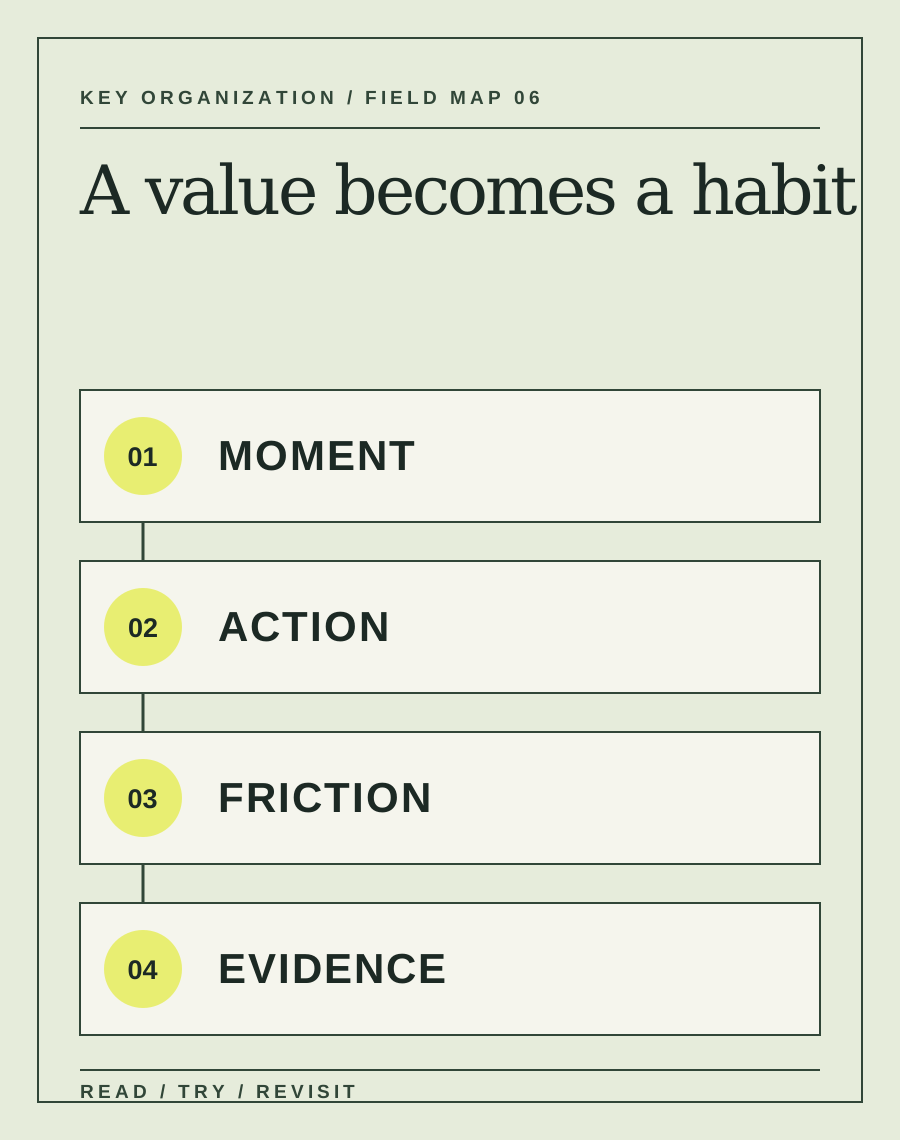
- Choose a moment
Pick a recurring situation where the value matters: a handoff, review, meeting or customer reply.
- Write the action
Describe what a person would do, not what kind of person they are. Make it possible to observe without reading intentions.
- Remove friction
Add a default, template or prompt that makes the action easier to repeat.
- Look for evidence
After two weeks, ask whether the action happened and what made it easier or harder.
Imagine a team that values openness. In project reviews, the facilitator asks for one risk before presenting a preferred solution and records who will investigate it. 'Be open' becomes a repeatable meeting move.
Do not measure a person by one missed moment. Use the test to improve the system that supports the habit.
RESEARCH CONTEXT / Google re:Work: dynamics of effective teams ↗
Try it in your next workweek.
Choose one value and list three observable actions that would show it in a normal workweek.