Key Organization ·
Make every moving box find its room
A coloured sticker can help a mover find a room. A room name, box ID and short manifest make the same system usable when colours are hard to distinguish or the box is stacked.

A box labelled K-03 goes to the kitchen, matches a manifest entry and is checked on arrival. Text and IDs carry the information as well as colour.
1. Name the destination before you pack
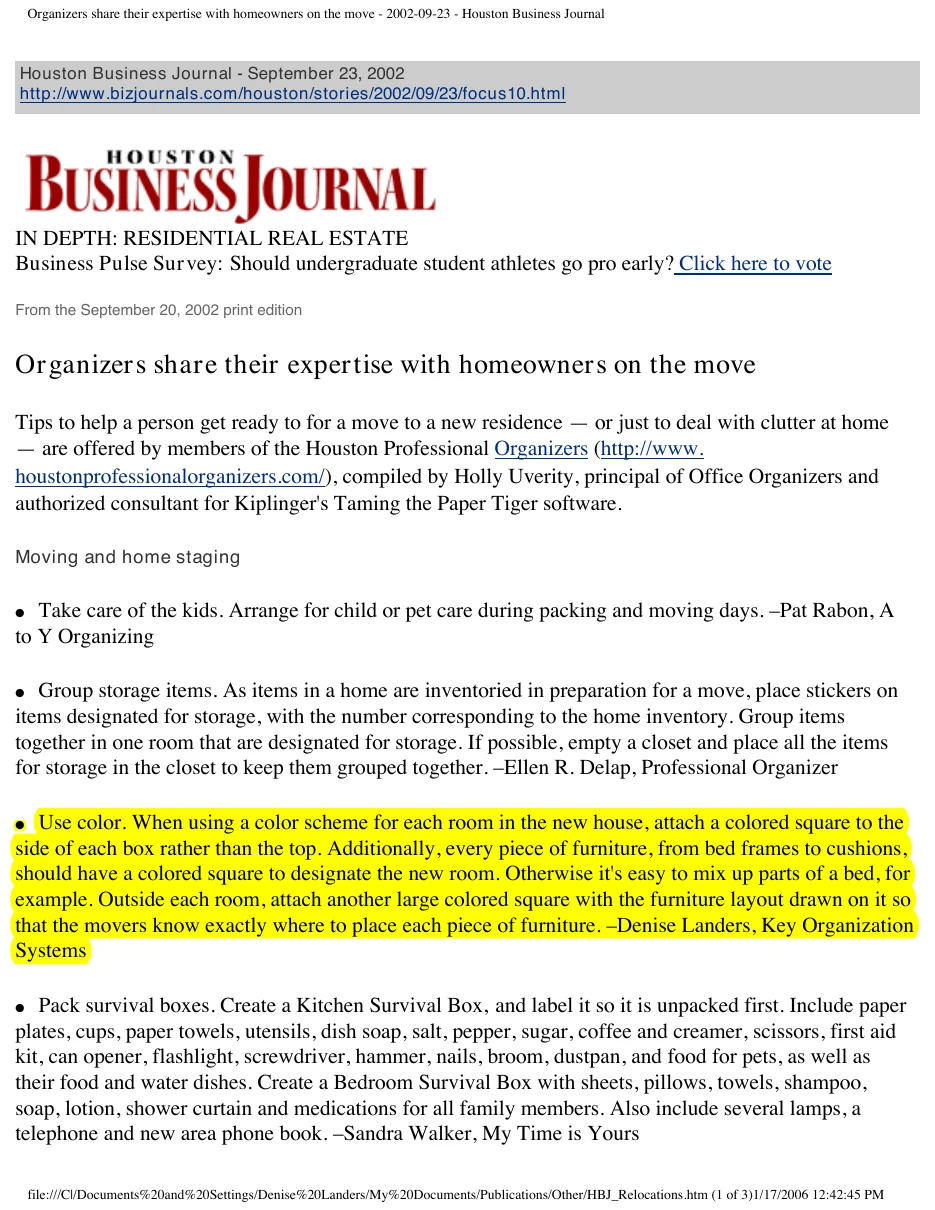
The 2002 Houston Business Journal collection includes several organisers’ advice. Denise Landers’s contribution concerns matching coloured room markers on boxes, furniture and destination rooms. Other contributors discuss storage groups, essential boxes and unpacking shelves before fragile contents. This guide combines those distinct ideas into a new manifest; it does not turn the old article into a current moving-company endorsement.
Give each destination a short code and written name: K — kitchen, B1 — bedroom 1, ST — storage. Put the same label at the room entrance. Choose a colour if helpful, but always print the text too. For a box that belongs in storage, write ST rather than the room it came from.
2. Put identity and priority on the side
Assign a unique box ID, such as K-03. Mark at least one visible side so the label is useful when boxes are stacked. Record a short contents description in a private manifest. Avoid putting sensitive details or the value of possessions on the outside.
Use a separate priority field: first night, normal or storage. “Kitchen” tells the mover where to place a box; “first night” tells you when to open it. Neither replaces handling instructions or the carrier’s rules. Confirm those directly with the mover, especially for restricted or fragile items.
3. Try a complete arrival sequence
Fictional two-room move: K-01 contains basic eating utensils and is marked first night. K-03 contains everyday dishes, normal priority. B1-02 contains bedding, first night. ST-01 contains seasonal decorations, storage.
- At arrival, point out the room labels before unloading starts.
- Check each ID against the manifest and record arrived, not yet seen or damaged packaging.
- Open K-01 and B1-02 first. Keep the manifest available until the final box is accounted for.
- Before unpacking fragile dishes, assemble the shelf or cabinet and check that it is ready to use.
- If K-03 has not appeared, search the manifest and room codes before opening unrelated boxes. Record an unresolved item with the mover through the agreed channel.
This example has four boxes and two first-night boxes. It does not estimate packing time, insurance value or the cost of a move.
4. Keep essentials accessible
Prepare what your household actually needs for the first evening: bedding, suitable eating supplies, charging equipment and basic cleaning items. Keep essential personal documents and any items you must personally access with you, following applicable transport and storage instructions. Adapt the plan for children, pets and accessibility needs rather than copying an old checklist unchanged.
Before booking storage, measure the items and access route. Before buying containers, decide what you are keeping and where it will go. For papers that must remain retrievable during the move, use the filing guide; for an absence or disruption at work, use the emergency handoff worksheet.
Make your own record
Download the blank CSV and fill it on your own device. Completed records are not sent to this website. You can also copy the headings onto paper.
Download the blank CSV worksheetOpen the completed example record
- Room code and name
- K / kitchen
- Box ID
- K-03
- Contents
- Everyday dishes
- Priority
- Normal; after cabinet assembly
- Arrival status
- Not yet checked
- Exception and owner
- Record missing/damaged item with agreed mover contact
Sources and reading limits
Organizers share their expertise with homeowners on the move · Houston Business Journal · 23 September 2002. The original document and the new editorial exercise are distinct. An archive capture date is not a publication date.
No new expert review or measured outcome is claimed.
Inspect the original page facsimile