Define the folder’s job
This is a document-organization exercise for a household. It does not replace local emergency instructions, an evacuation plan or professional advice about a particular risk. Follow the instructions of the authorities responsible for your area.
Texas Ready’s planning guidance includes emergency contacts, meeting places and important information. It also recommends sharing a written plan with the family and keeping sensitive identification details separate for security. Use that as a prompt to think about access, not as a reason to put every sensitive record in one public list.
The folder map and handoff sheet below are our proposed organization method. They are not a government form, a certification or evidence that a household is fully prepared.
Separate a locator from the records
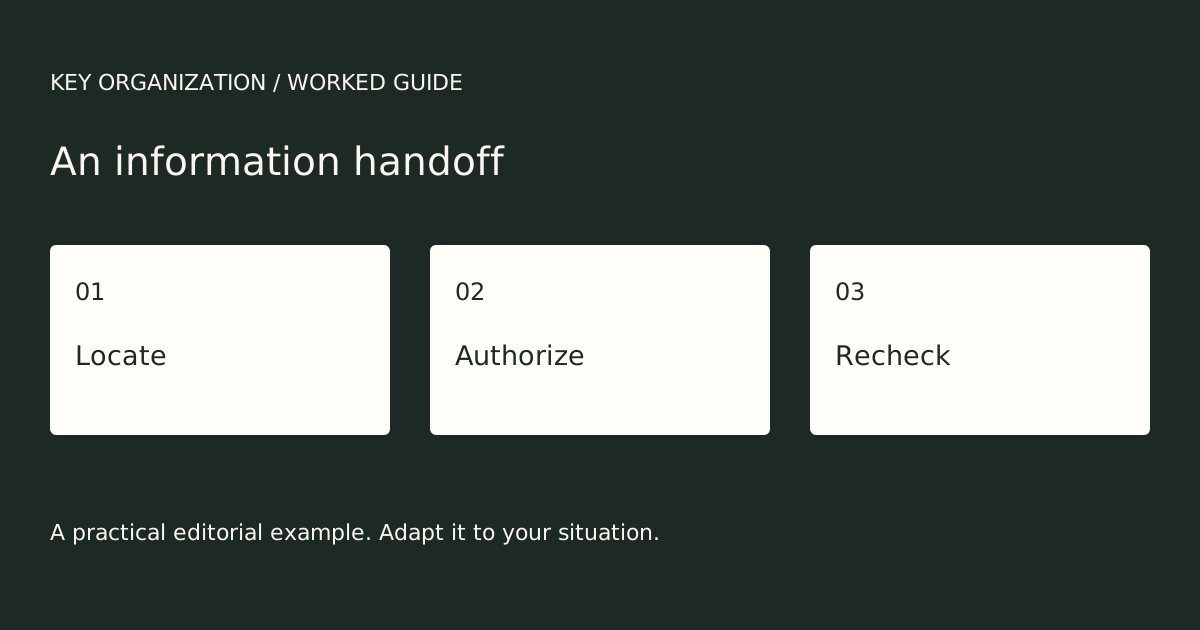
- Make a simple locator. Record the categories you need, where their current copies live and who is allowed to retrieve them. The locator can say “insurance folder in the agreed place” without listing a policy number.
- Keep the records in an appropriate private location. Decide who needs access and what should stay separate. Do not place passwords, identity numbers or complete medical records on a shared public worksheet.
- Choose a usable backup route. Consider how a trusted person would find contact information if the usual phone or account were unavailable. A carefully stored printed copy may be part of the plan.
- Record responsibility for updates. Identify a person who will review a changed phone number, contact or document location. A file marked “final” is not automatically current.
Try an ordinary retrieval rehearsal
| Question | What a usable answer looks like |
|---|---|
| Who is the trusted contact? | The person checking the plan can find the agreed contact route without needing the unavailable phone. |
| Where is the locator? | Its location is known to the people who need it; it is not buried in an unexplained folder name. |
| Can the relevant copy be opened? | The authorized person can read it using the planned method, rather than discovering a missing permission. |
| What needs changing? | Write the specific failed step, its owner and the next review trigger. |
The only locator is inside the locked account you cannot open. What failed?
The backup depends on the same access route as the original. Reconsider the agreed recovery or alternate-access method with the people involved. Do not share an account password publicly or disable protection merely to make the exercise pass.
Use this as a calm tabletop check. Do not simulate a dangerous event or interrupt a real emergency service. A successful document lookup tests that lookup only.
Keep the handoff small and reviewable
Download the blank CSV and fill it privately, or copy the headings onto paper. Start with one category, such as contact routes or the location of an insurance document. Add the owner, authorized reader, backup route and review trigger.
A useful trigger is a real change: a person moves, an access permission changes, or a document is replaced. Agree how the old locator will be identified so that two contradictory copies do not both look current. Check the plan with the people who actually need to use it.
This website does not receive the contents of the downloaded sheet. Do not send completed sensitive records to the site as part of this exercise.
Use the blank worksheet
Download the blank worksheet (CSV)
The file is a plain table. You can also copy its headings onto paper or print this guide. Examples on this page are illustrative, not a record of a real person or household.
Sources, history and limits
New editorial guide: 18 October 2026. No named specialist review or measured outcome is claimed.
Texas Department of State Health Services — how to make a plan. Read on 18 October 2026.
An external historical link points to this subject at this URL, but the original article’s text has not been recovered. This is a new guide based on the current public source below. It does not claim to reproduce the missing article or to speak for a former author.