The archived Productivity Today blog returned to email management repeatedly. The current problem is less about reaching inbox zero than making sure a request arrives with enough context to act and a clear place for the resulting decision.
Put the requested action first
Open with the decision or action needed, the owner and the deadline. 'Please choose the packaging option by Thursday so production can start Friday' is more useful than a long thread that only reveals the request at the end. Add the reason the deadline matters; urgency without consequence is hard to judge.
State what happens if the recipient cannot decide. Is a substitute authorized? Will the team use a default? Can the decision wait? A message with no fallback forces repeated follow-ups and leaves the sender guessing whether silence means agreement.
- Use a subject that names the decision, not only the project.
- Address one accountable owner; copy others only for context.
- Give a fallback for an unanswered request.
Give enough context to compare options
Summarize the constraint, the options and your recommendation in a few lines. Link to the source document rather than pasting an entire history. If the recipient needs to search through six attachments to find the trade-off, the message has not completed the handoff.
When a conversation produces new information, update the decision note or project page instead of making the email thread the only source of truth. A person joining later should be able to see the latest choice, the reason and the owner without reconstructing every reply.
- Name the constraint that rules out some choices.
- Present two or three real options with a recommendation.
- Link to the current decision record.
Close the loop outside the inbox
The recipient's reply should say which option was chosen, what remains open and who will act. The sender then records the decision where the work is managed. If the choice changes, append the new reason and date rather than silently replacing the old note.
Use the same pattern in chat or a ticket when that is where the team works. The format matters more than the medium: request, context, owner, due point and visible outcome. A short decision with a clear record beats a beautifully written thread that nobody can find.
- Record the final choice in a stable shared location.
- Reply to the affected people with the outcome, not another open question.
- Revisit repeated requests that should become a standing rule.
The decision handoff template
Copy this structure into an email or ticket and remove any line that does not help the recipient choose.
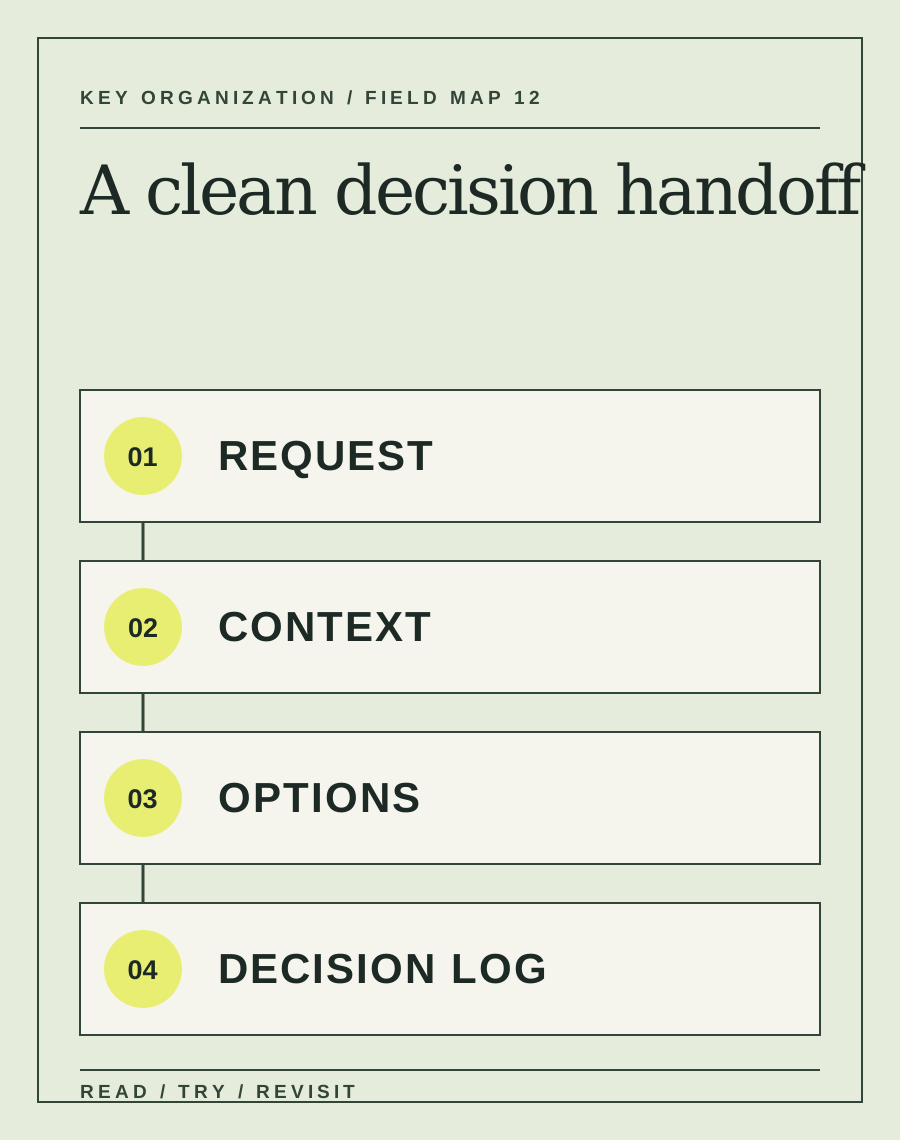
- Request
What decision is needed, by whom and by when?
- Context
Why now, and what constraint cannot be ignored?
- Options
List the viable choices and your recommendation.
- Record
Where will the final choice and owner be visible afterward?
Fictional example: a publisher must choose between a short guide and a longer report. The editor writes: 'Choose format by Tuesday noon; translation starts Wednesday. The short guide fits our current evidence and budget. A report needs two missing interviews. I recommend the guide. If you cannot decide, I will defer translation rather than assume approval.' The selected format is then added to the editorial brief.
Do not manufacture urgency or use email as proof that a silent recipient agreed. Agree explicit decision rights in advance.
Sources and context.
Archive captures show the older question, not a current endorsement or an article to reproduce. The other links provide research or platform context; check dates and local requirements before applying them.