An archived Key Organization blog post compared closed offices and open space. That binary misses hybrid meetings, shared desks and different access needs. The useful question is how each setting supports a particular kind of work without excluding the people doing it.
Describe the task before the room
Make a list of recurring work: deep writing, confidential conversations, quick coordination, making physical objects, customer calls and group decisions. For each, write the needed conditions. Deep writing may need low interruption and a screen; a sensitive conversation needs privacy and trust; a workshop may need a board, materials and shared visibility.
Ask the people doing the work what prevents completion now. A team may say it needs more meeting rooms when the real issue is that status updates are held live. Another may call for quiet zones while urgent support remains unstaffed. The room decision should follow the work-system decision, not replace it.
- Name the task and its required conditions.
- Separate privacy from mere preference for quiet.
- Check access needs with the people affected.
Map tasks to settings and transitions
A setting can serve more than one task, but switching between settings has a cost. If a person must move three times to finish one case, the design is creating friction. Map the actual route: start, collaboration point, private step and handoff. Include remote participants rather than treating the room as the whole meeting.
Write a small set of norms that match the setting. A shared zone can welcome quick questions; a focus zone can use a visible 'available later' signal; a private room can have a booking and confidentiality rule. Keep norms legible and optional where the task allows. Do not turn a preference into a moral judgment about who is committed.
- Check sound, visual privacy and network access.
- Include remote participants in the interaction design.
- Minimize forced moves during a single task.
Test one change with real work
Choose one recurring problem, such as confidential calls overheard in an open area. Try an allocated private call slot or room and ask whether callers can now complete the task. Watch for a new bottleneck: too few rooms, a complicated booking rule or a route that excludes a colleague.
The best arrangement can vary by team and season. Revisit the map when the work changes, not because a trend report declares a universal winner. Document the trade-off openly: a space that encourages spontaneous help may need a separate protected setting for concentrated work.
- Pilot a reversible change before redesigning everything.
- Assess the task outcome and the burden of using the space.
- Review who benefits and who loses access.
The task-to-setting matrix
Use four rows to map a representative week of work before making a space policy.
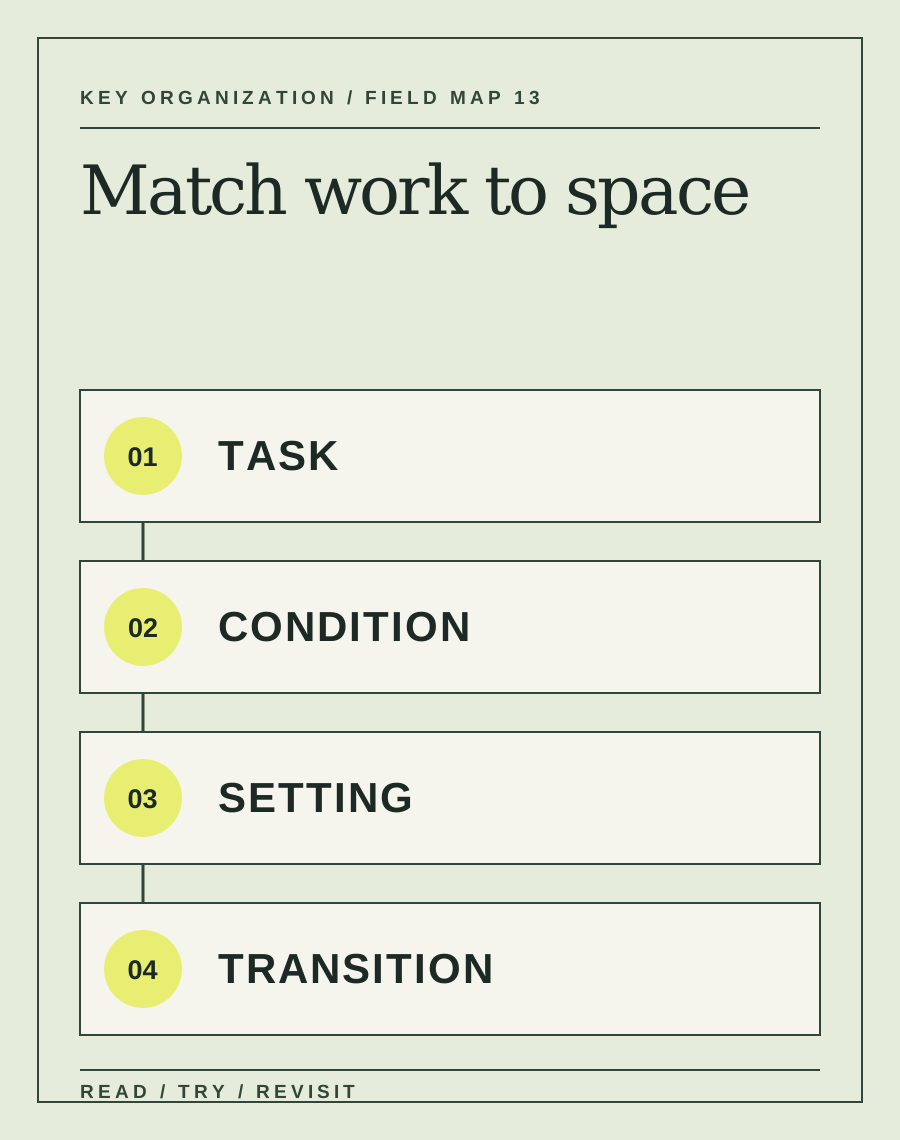
- Task
Name the work and the result it should produce.
- Condition
List privacy, noise, equipment, access and collaboration needs.
- Setting
Pick the place or remote pattern that meets those needs.
- Transition
Note any movement or handoff the setting imposes.
Fictional example: a distributed legal operations team has a weekly contract review. The actual work has three parts: individual reading, a short decision meeting and confidential client follow-up. They stop reserving a two-hour group room for all three. Instead they share notes first, meet for unresolved choices and schedule private calls separately.
Workspace choices can involve disability accommodation, safety and confidentiality duties. Use this editorial matrix to surface needs, then follow the relevant policies and professional requirements.
Sources and context.
Archive captures show the older question, not a current endorsement or an article to reproduce. The other links provide research or platform context; check dates and local requirements before applying them.