The former site offered separate quizzes for individuals and groups. Their enduring idea is self-examination; the useful modern update is to ask about observable work and avoid a universal score that pretends every team is alike.
Ask what happens, not how good people feel
Have a small team answer twelve questions independently: Can we name this week's top two outcomes? Does every active task have an owner? Can a new colleague find the current decision? Do requests have a response path? Do meetings end with a recorded choice? Can someone take over an absent colleague's routine? Are deadlines linked to real capacity? Are exceptions visible? Do people know where to ask for help? Can a concern be raised early? Is rework tracked? Do we revisit changes after trying them?
Offer three answer choices: usually, sometimes, rarely. Ask for one recent example beside any 'rarely'. Do not turn the answers into employee ratings. The value is in the differences between perspectives and the specific examples they reveal.
- Let people skip a question they cannot observe.
- Collect examples rather than names of supposed culprits.
- Discuss patterns in the work, not personality traits.
Find the bottleneck behind the answers
Group the questions into clarity, flow, resilience and learning. If clarity is weak, examine priorities and ownership. If flow is weak, inspect handoffs and response expectations. If resilience is weak, document substitutes and exceptions. If learning is weak, ask how feedback changes the process.
A single low answer is a prompt, not a diagnosis. Compare it with a real recent case. For example, if people disagree about who approves a draft, trace one draft from request to publication and note the exact step that stalled. This yields a practical target without claiming scientific precision.
- Choose the group with a repeated concrete example.
- Describe one delay or rework event end to end.
- Ask whose perspective is missing from the review.
Make one small change and repeat
Write a hypothesis: 'If every draft has a named approver, fewer drafts will wait for a decision.' Assign an owner, state what will be observed and set a review date. Keep the change small enough to reverse if it creates a new burden.
Repeat the same questions after a few weeks, but do not chase a better total score. Ask whether the original bottleneck disappeared and whether a new one emerged. A team that surfaces disagreement may be learning more than one whose members always select 'usually'.
- Record the rule being tested and its owner.
- Use evidence from actual work, not a vanity score.
- Retain, revise or stop the rule at the review.
From twelve answers to one experiment
The printable questions above are the audit. This card turns the discussion into a useful decision.
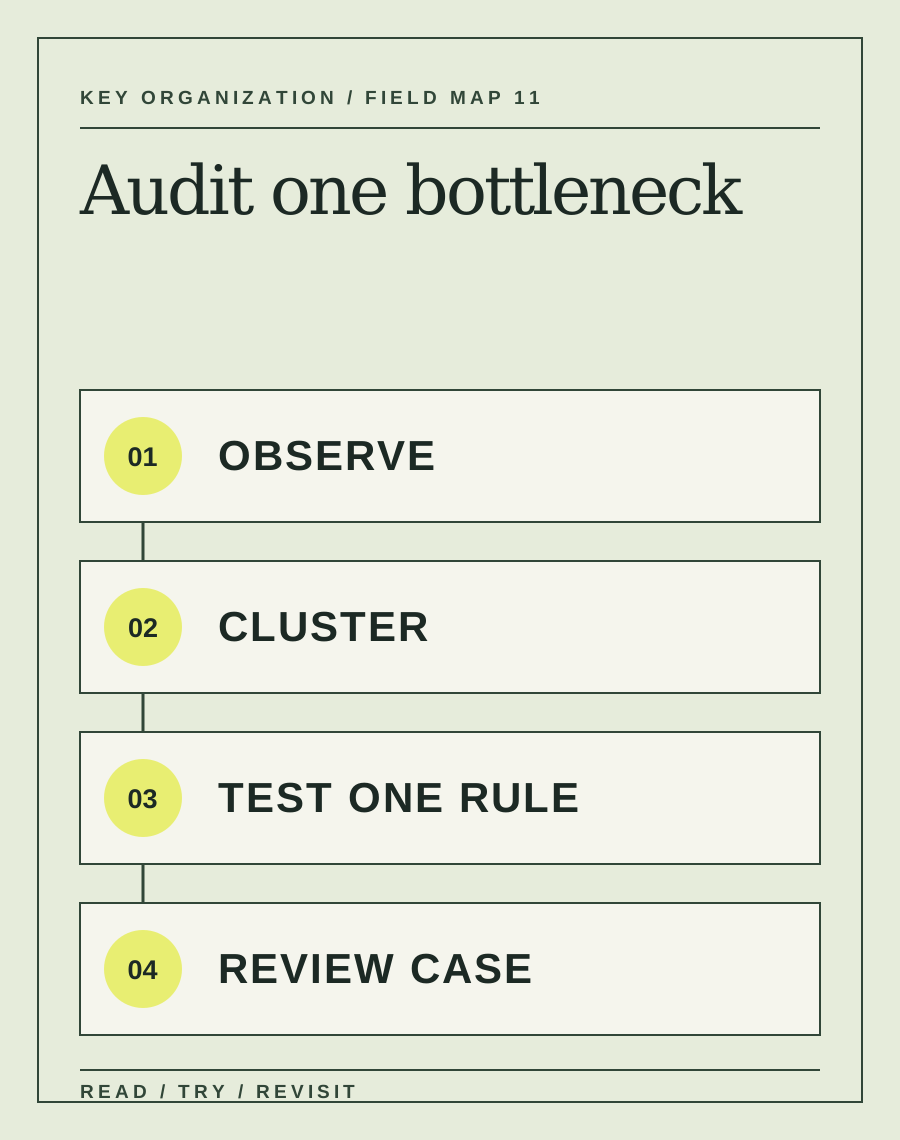
- Observe
Gather anonymous or openly shared examples, according to the team's size and trust.
- Cluster
Place the weak answers under clarity, flow, resilience or learning.
- Test
Select one observable bottleneck and one reversible rule change.
- Review
Compare a real case before and after; keep or change the rule.
Fictional example: six colleagues mostly answer 'sometimes' to finding current decisions. Their latest project has three conflicting versions of a launch date. They agree to keep a single decision note linked from the project page, with an owner for updating it. Two weeks later they check whether new requests cite the correct date.
This is an editorial discussion tool, not a validated psychometric instrument. Do not use it to rank employees or claim a quantified productivity gain.
Sources and context.
Archive captures show the older question, not a current endorsement or an article to reproduce. The other links provide research or platform context; check dates and local requirements before applying them.