Start with a recurring question: what is making good work easier or harder? The employee should be able to change the agenda. If there is no useful subject this week, agree to skip the meeting rather than fill the time.
Keep three jobs separate
A one-to-one can resolve an obstacle, exchange feedback or discuss growth. It cannot do all three well if the entire meeting is consumed by a project update. Share routine status in writing before the call. Ask the employee which subject matters most today and reserve space for it.
Use a predictable cadence, but do not present one duration as a universal rule. A short meeting can be enough for a stable week; a sensitive topic may need a dedicated conversation and privacy.
Two preparation sheets, two perspectives
Employee sheet: What moved forward? Where am I blocked? Which decision or context do I need? What skill do I want to practice? Which topic should stay private? The employee may choose what to share.
Manager sheet: What promise did I make last time? What decision can I make today? What feedback is supported by an observation rather than a label? What information should I give before asking another question? Check whether the meeting location and format are appropriate for confidentiality.
A conversation route that leaves a trace
- Open with the employee's priority and ask what would make the time useful.
- Clarify the situation: what happened, what has been tried, and what constraints are real?
- Decide together what can happen next. Name a single owner for each action and a date for a check-in.
- Close by asking what the manager should change or stop doing.
Record only decisions and agreed actions, not a transcript of personal disclosures. Give the employee access to the action list and correct it if the written version differs from what was agreed.
The two-lane one-to-one card
The graphic shows preparation and follow-through as shared work. Its full text is below so it works without the image.
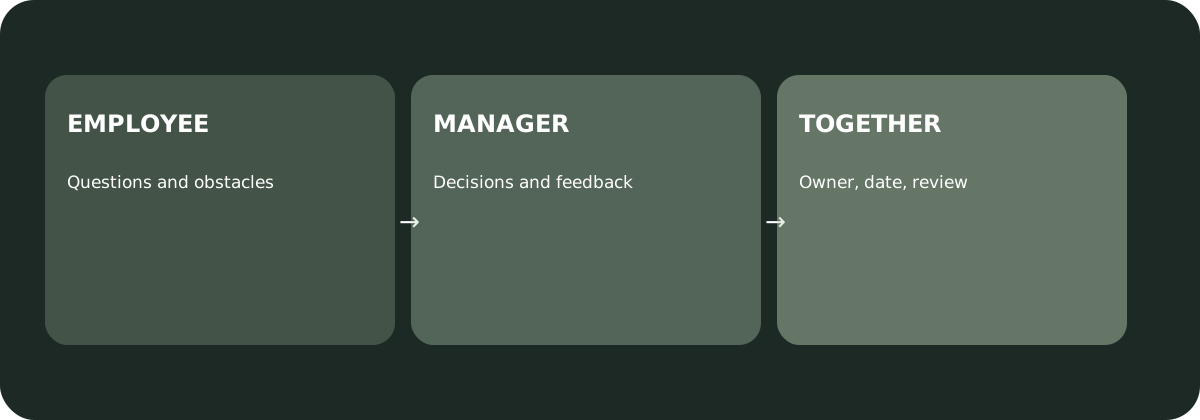
Text version: Employee prepares questions and obstacles; manager prepares decisions and feedback. Together they choose one priority, agree an owner and date, and revisit that action at the next meeting.
Topic: [one sentence] · Decision or experiment: [specific next step] · Owner: [person] · Check-in: [date] · Evidence of progress: [what we can observe]. Keep personal notes outside a shared tracker unless the employee agrees.
A small design team member says reviews keep arriving after handoff. The manager agrees to name a reviewer before work starts; the employee drafts a two-line review request. Both check the next two handoffs for timing and clarity. The example is illustrative, not a reported team result.
SOURCE CONTEXT / Google re:Work, Manager Effectiveness ↗ · Google re:Work, Team Effectiveness ↗. Sources checked 30 September 2026; this agenda is our own editorial template.