The archived Key Organization pages described ringing phones, drop-in questions and internet distractions. The modern version arrives through chats, meetings and alerts as well. Before silencing everything, find out which requests actually need a fast human response.
Keep a small interruption log
For three workdays, record only the interruption's source, question, urgency and outcome. Do not name or score colleagues. A one-line note is enough: 'Chat, approval needed for customer exception, 12 minutes, decision made.' The purpose is to expose repeated patterns, not to audit an individual's attention.
At the end, sort the notes into four groups: time-critical risks, missing information, routine requests and optional noise. A supposed distraction may reveal a blocked teammate; a supposed emergency may be a predictable request without a published answer. This classification makes the remedy more precise than a blanket 'no messages' rule.
- Sample a few days rather than tracking everyone continuously.
- Record the question and result, not private message content.
- Look for repeated decisions and missing owners.
Give each group a route
Define a small urgent channel for genuine risks: service outage, safety issue or a customer commitment that cannot wait. State who monitors it and what happens if they are unavailable. For routine requests, publish a location for the answer and an expected response window.
Protect focus blocks for work that benefits from continuity, but pair them with a clear path to help. If the only expert closes notifications with no substitute or published decision rule, the team has traded one person's concentration for everyone else's delay. Rotate the role or document the answer before adding silence.
- Write examples of urgent and non-urgent requests.
- Name a substitute for the urgent channel.
- Set a response window for routine questions.
Fix the cause, then measure the change
Choose one recurring interruption and change its source. A missing approval rule becomes a decision table; a weekly status question becomes a visible project note; noisy alerts become a smaller set of meaningful notifications. Keep the experiment narrow so you can tell which change helped.
Review whether the original requester got the answer in time and whether the person doing focused work could finish. A lower message count alone is not success if problems simply move into meetings or remain unresolved. Ask both sides what became easier and what new delay appeared.
- Change one routing rule at a time.
- Check both focus and request resolution.
- Reopen the rule when a genuine emergency is missed.
The four-route request map
Use this map to agree where a new question belongs before it reaches the wrong person's inbox.
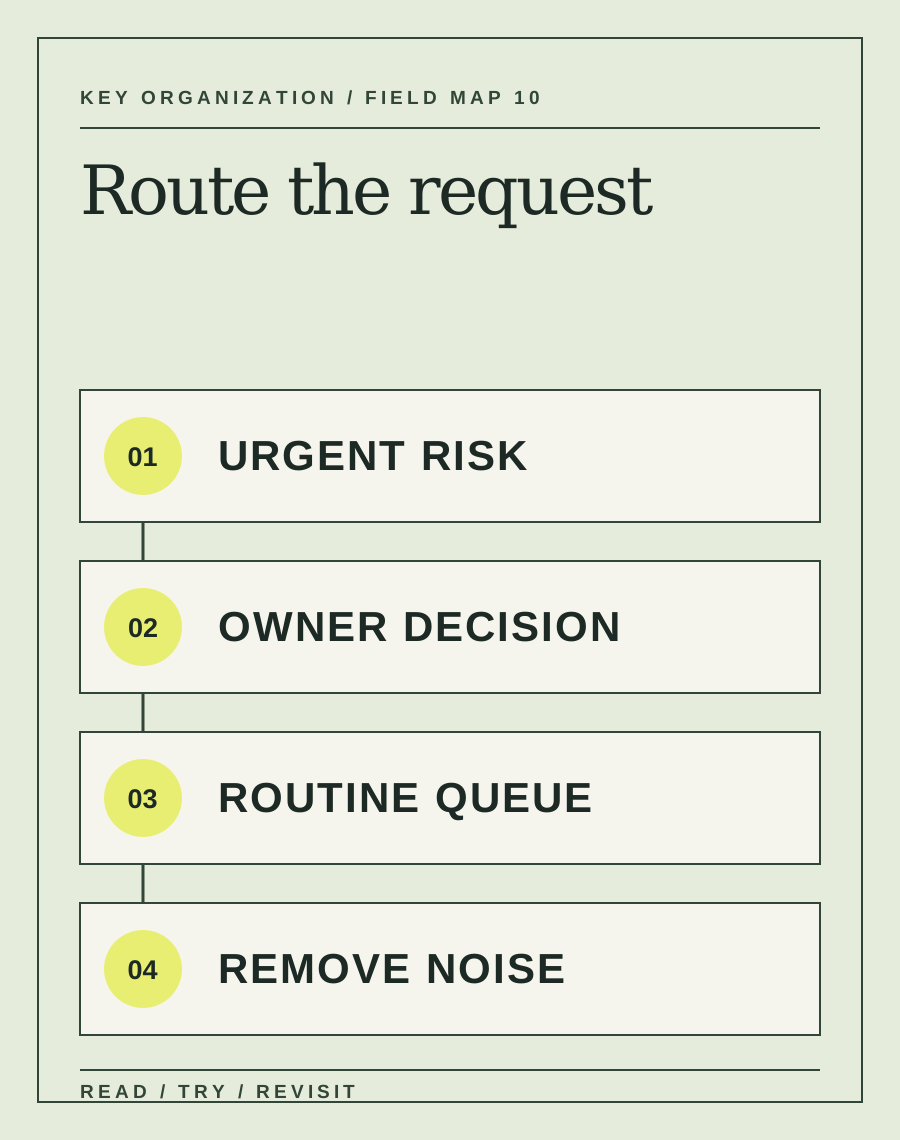
- Risk
A true urgent risk goes to the named live channel and backup.
- Decision
A one-off choice goes to the authorized owner with context and deadline.
- Routine
A repeatable request follows the documented queue and response window.
- Noise
A low-value alert is grouped, muted or removed after checking its purpose.
Fictional example: a design team sees repeated messages asking whether a draft is approved. Instead of asking people to stop messaging, the lead adds a visible status and approver to each draft. A blocked launch still uses the urgent channel. After two weeks the team checks whether decisions are faster and whether focus time has improved.
An interruption may signal an accessibility need or a colleague lacking authority. Do not treat every request for help as poor discipline.
Sources and context.
Archive captures show the older question, not a current endorsement or an article to reproduce. The other links provide research or platform context; check dates and local requirements before applying them.